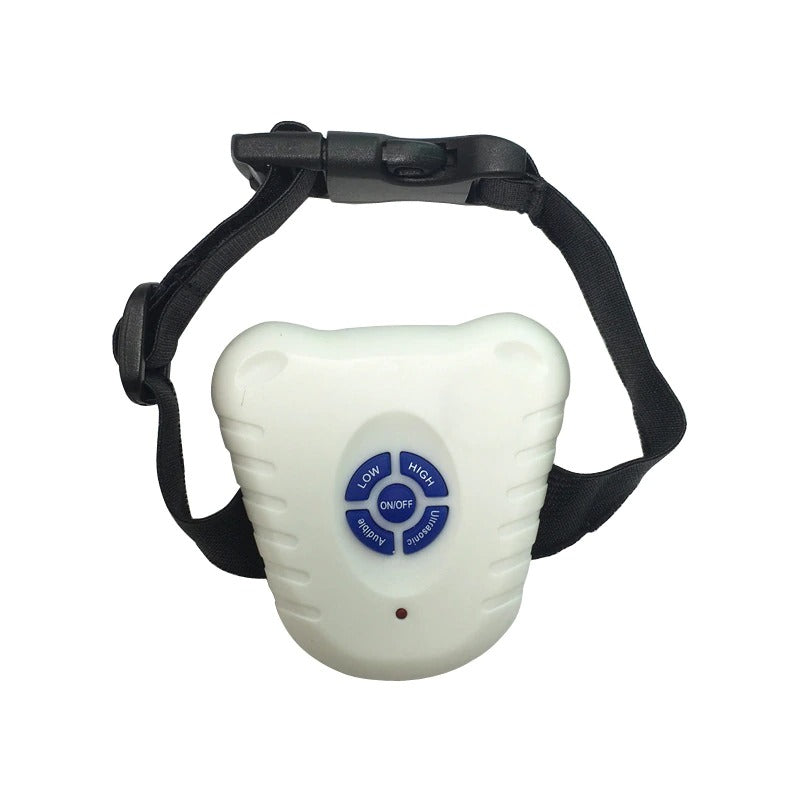
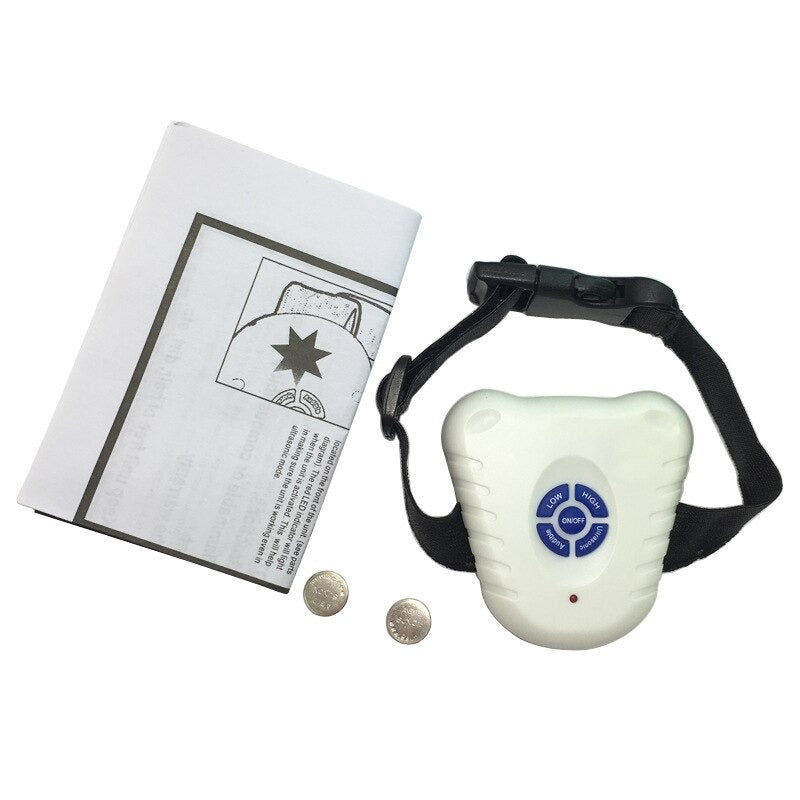
Humans and dogs have coexisted since the dawn of time. Dogs have adapted to play a variety of jobs, including watchdogs, guard dogs, and more recently, police dogs and sniffer dogs. You can regulate the behavior of your pet with this device and control its random barking. They become better trained the sooner you begin the training with this Training Device Control Barking.
Features:
Item Type: Bark Deterrents
Type: Dogs
Material: Plastic
More About The Product:
Healthy Pet Toys-The welfare and security of pets are our top priorities. All of the toys are constructed of cotton and natural rubber. When teething, dogs want to chew on anything in the house. Therefore, chew toys, pacifiers, and rubber teething rings are all excellent ways to help your dog while they are teething by relieving its itchy teeth.
Interactive To Drive Away Boredom-Dogs love company, help your pet have a toy as its friend. Dogs are animals that need love and accompanied. Our rope toys are suitable for indoor and outdoor activities, such as tug of war, and toss and fetch games. That positively enhances the relationship between you and your dogs. Also, when you are busy, dogs can play with a wide variety of toys alone without feeling lonely.
Easy To Use While Training-A trained dog is what we call an educated dog. Nothing is more powerful than a well-mannered and trained dog. Training your dog has several advantages, some of which will actually save your life.
Frequently Asked Questions
The description references 'Training Device Control Barking' under 'Bark Deterrents' — this is likely a collar-based automatic bark deterrent that activates when the dog barks. The item type 'Bark Deterrents' confirms automatic collar function. However, confirm whether this is collar-worn or handheld before purchase — the distinction is fundamental to how the device operates.
Quality vibration-sensor bark collars detect larynx vibration from the dog wearing it, not airborne sound. This means a neighbor's dog barking will not trigger corrections on your dog. Sound-based collars (microphone detection) do activate on all nearby barking. Vibration-sensor collars are significantly more accurate for single-dog applications.
Better bark collars include a rest-and-reset feature: after 30-60 seconds of continuous activation (sustained barking), the collar deactivates to prevent over-stimulation, then resets after a cooling-off period. Without this feature, a dog that barks continuously during high-stress events (fireworks, thunderstorms) will receive uninterrupted corrections — potentially creating more anxiety, not less.
Bark deterrent collars should not be used on dogs with separation anxiety. The anxiety-howling is a symptom of distress — correcting the vocalization adds punishment to an already-distressed dog, which can intensify the anxiety and create additional fear associations with being home alone. Separation anxiety requires behavior modification with a qualified trainer, not aversive tools.
Most bark collars adjust from 20-60cm neck circumference. A Cocker Spaniel has a typical neck of 35-45cm, which falls comfortably in the middle of standard adjustment range. Ensure the contact points sit flush against the side of the neck, not dangling — loose contact means the sensor cannot detect vocal vibration reliably.
Progressive intensity collars typically start at a tone/beep, escalate to light vibration, then to stronger correction with each consecutive bark. Some allow the owner to set a maximum level cap. For first-time use, set the maximum at the lowest correction level and observe for 3-5 days before increasing. The goal is the minimum effective level, not the maximum available.