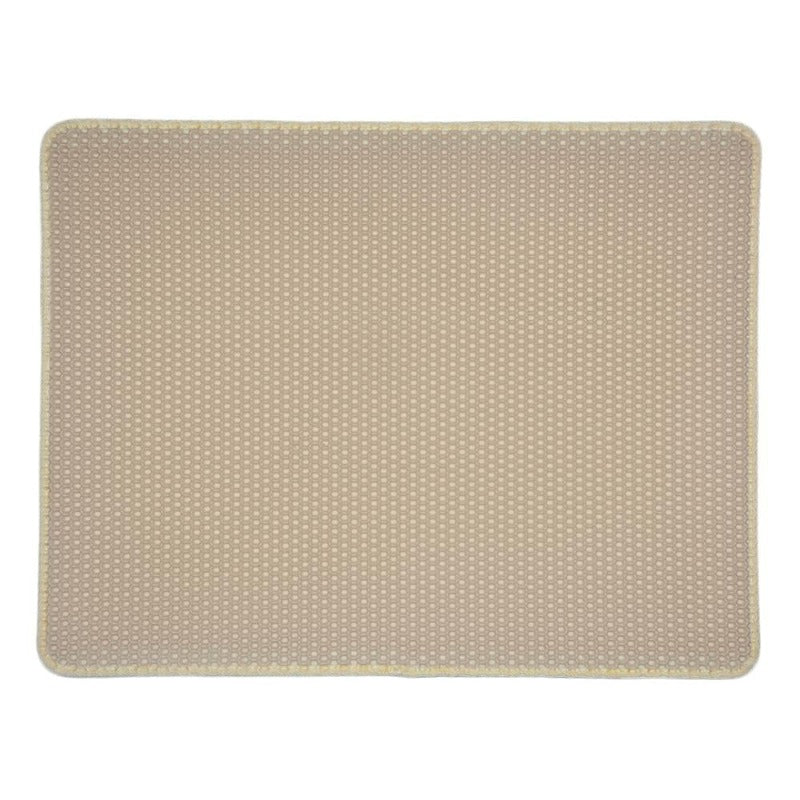
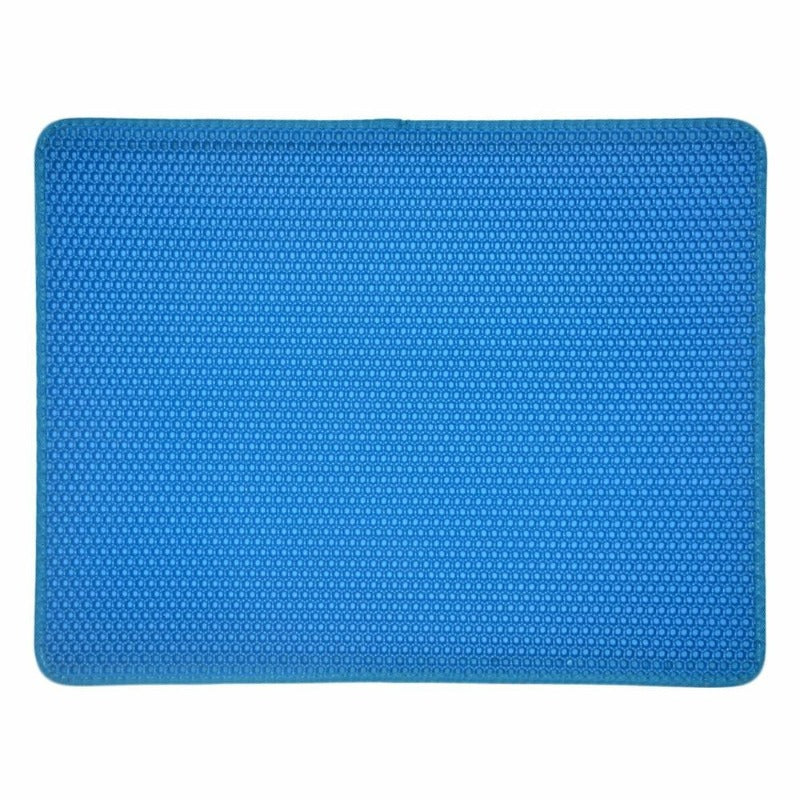
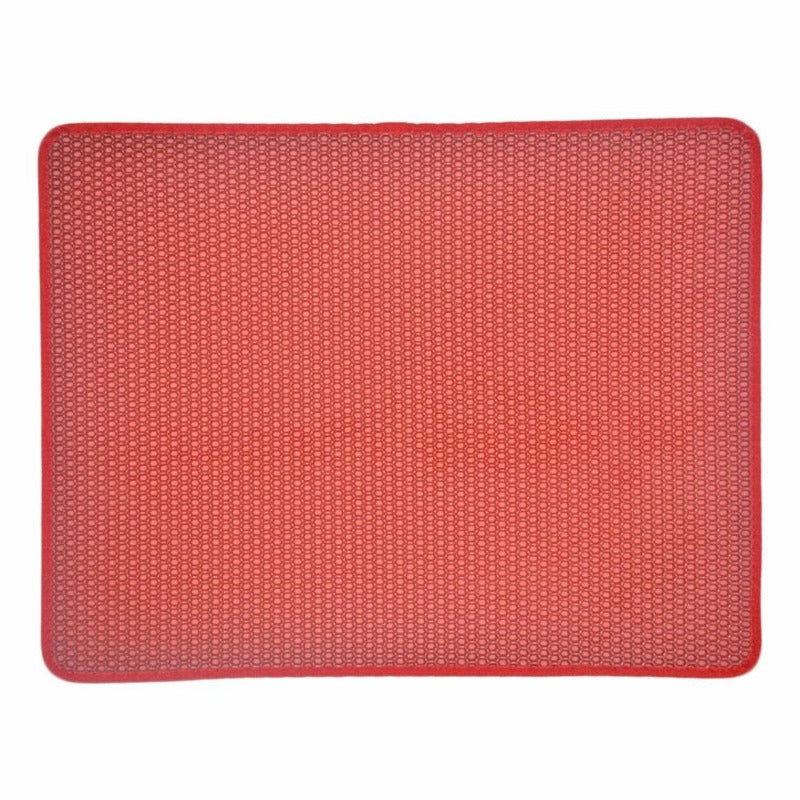
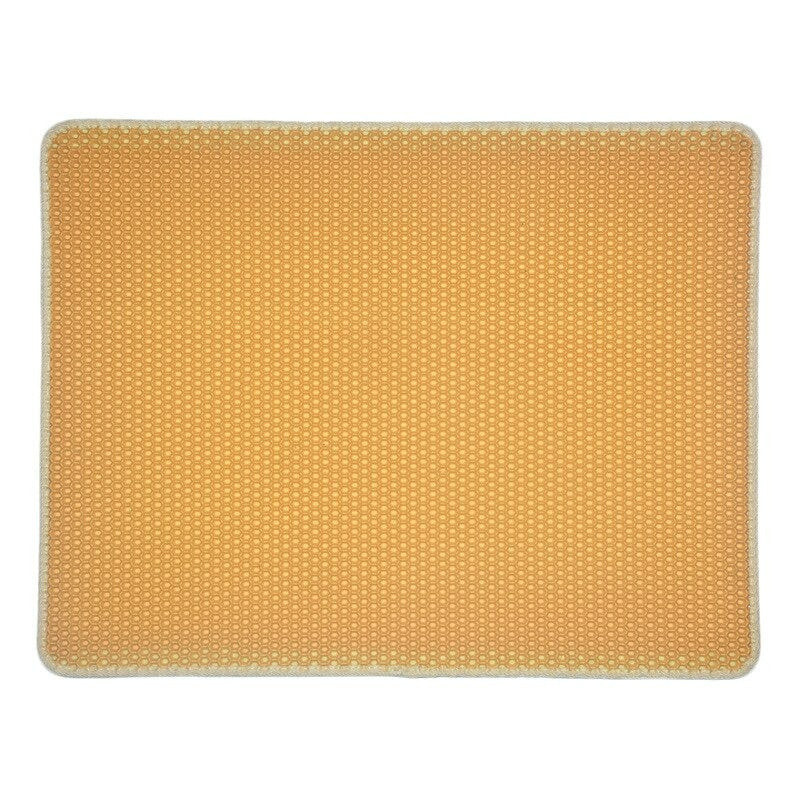
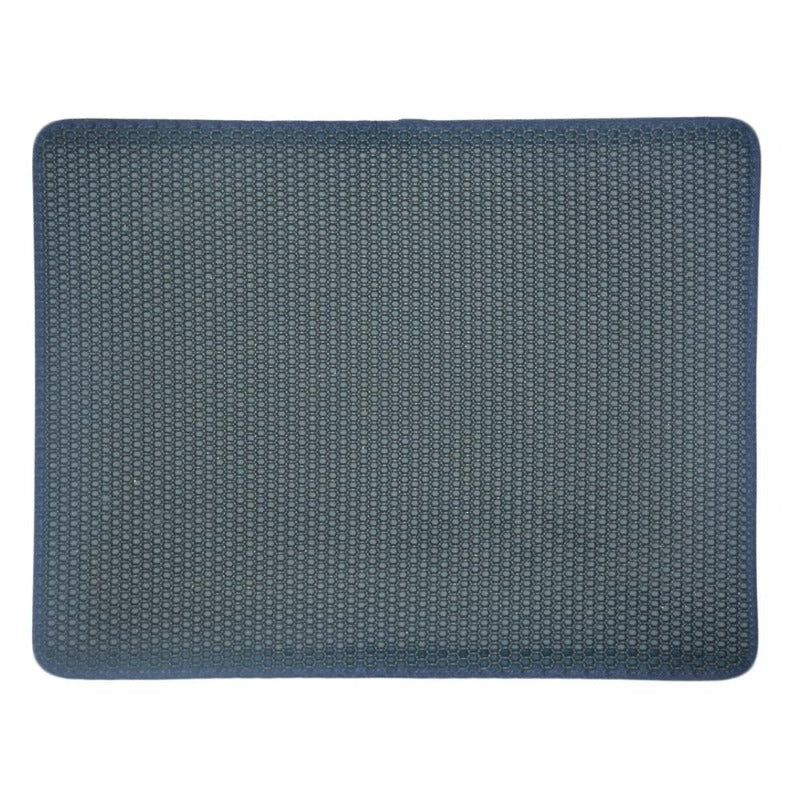
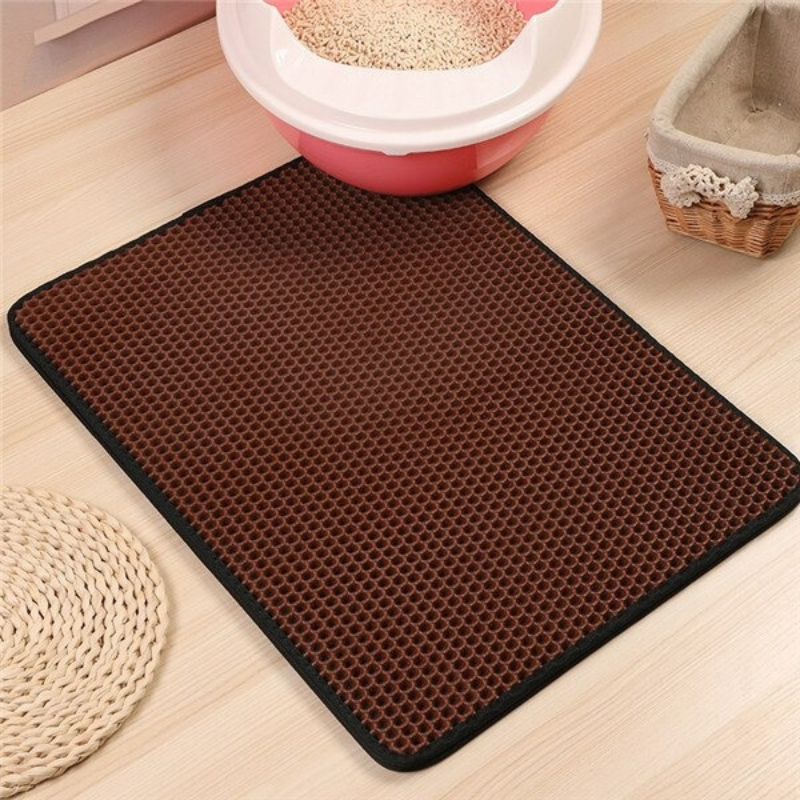
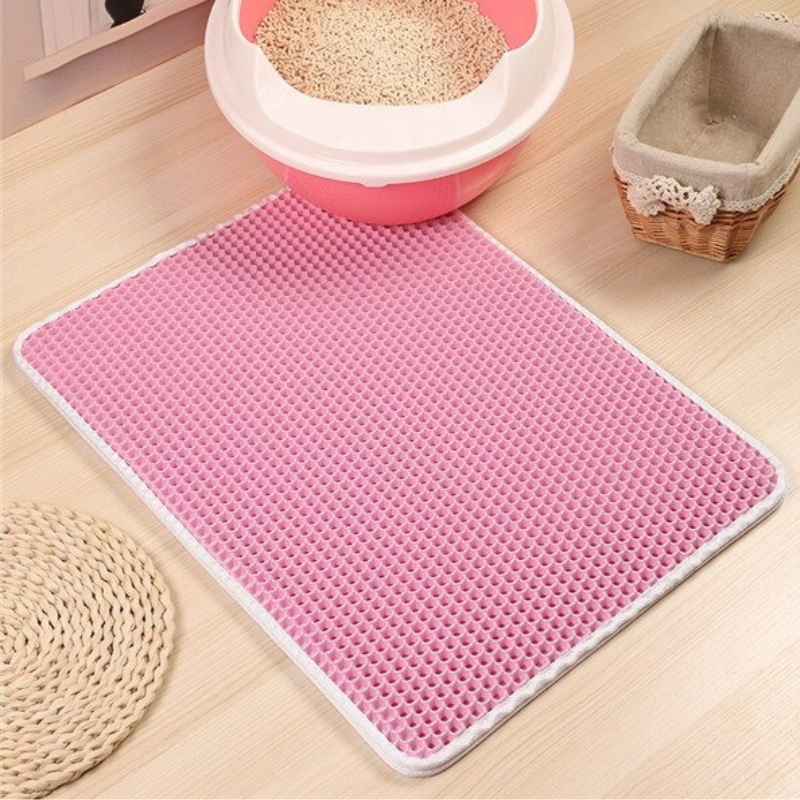
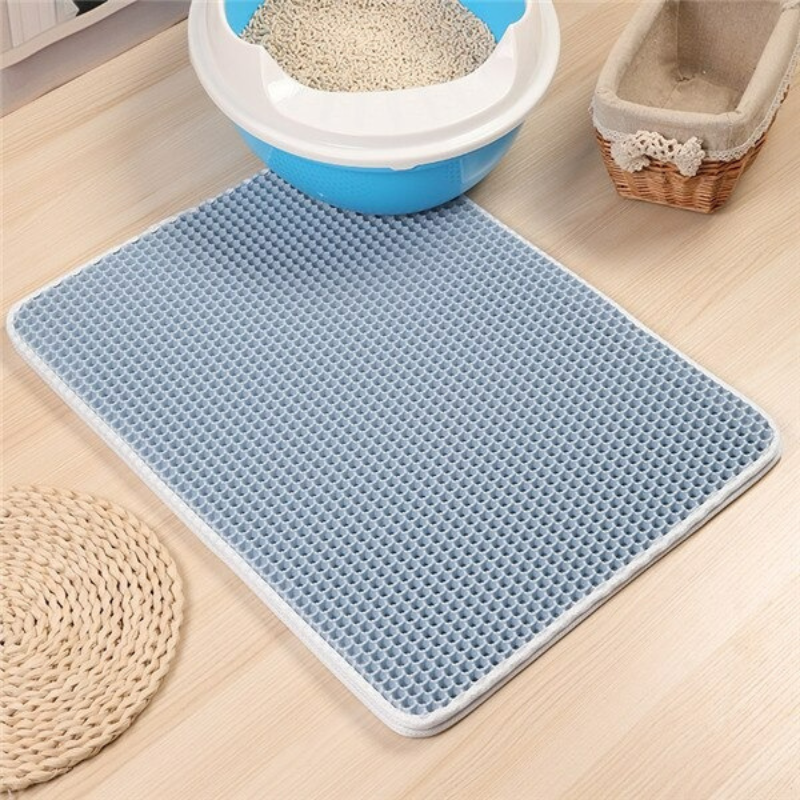
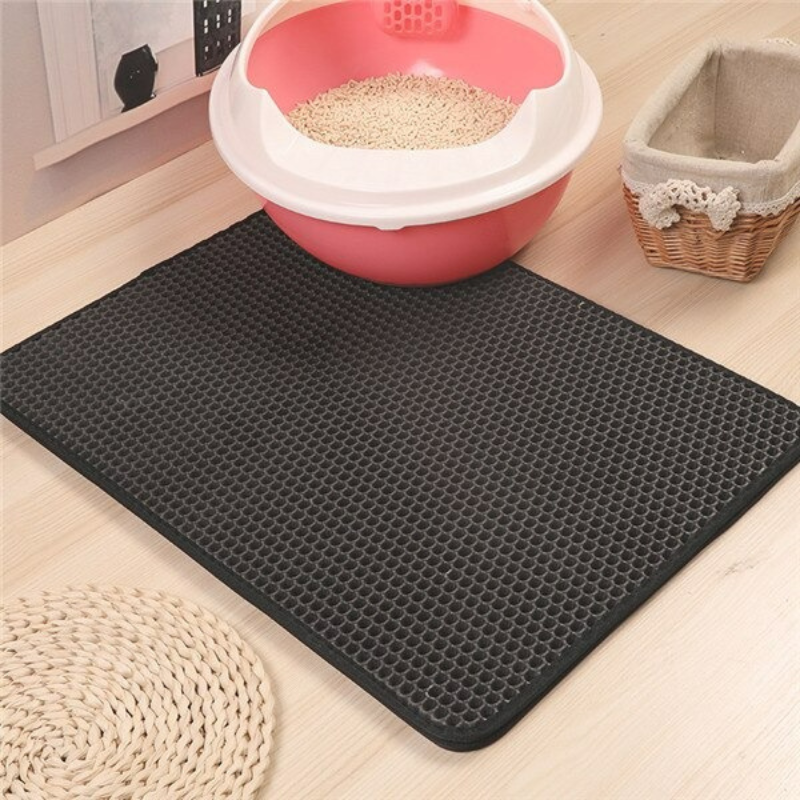
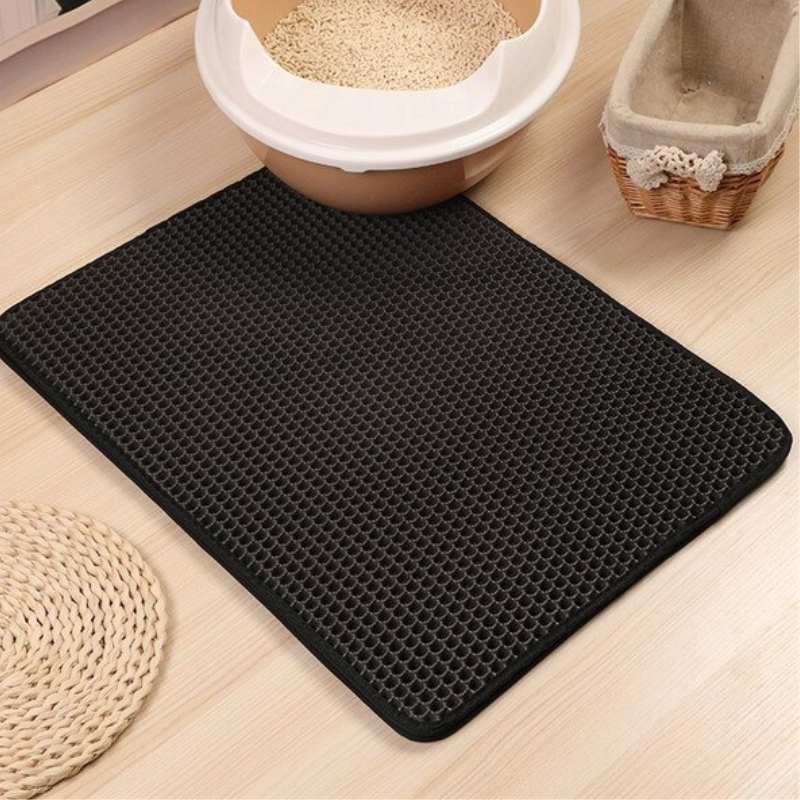
Pets Cats Litter Mat Beds are mats made from two layers that work together to trap litter stuck to your cat's paws or thrown out of the box. They have specially designed extra-large honeycomb-shaped openings on the top layer that are round and soft on your cat's paws, and allow litter to easily fall below onto the second layer.
Features:
Key Features
Type: cats
Size 1: 30x30cm, 45x60cm, 40x50cm, 55x70cm
Material: Oxford Fabric
Feature: Breathable
The two layers are attached on just one side so you can effortlessly dump caught litter back into the box or in the trash. The cross deep grooves catch the larger litter granules, while the mesh captures smaller granules and dust. Making it easy for you to collect the displaced litter particles and put them back into the litter box.
The upgrade design bottom prevents urine from soaking through to your floors and will keep the mat in a stable place.
The mat is made of super soft material, is soft to the touch, and very comfortable for your cat to step on.
The entire pad is water repellent and the bottom layer is plastic which deters urine odors and is easy to clean.
Create a cozy environment for your cats.
Supporting Your Cat's Natural Feeding Instincts
Cats are obligate carnivores with specific nutritional needs and unique feeding behaviors. Unlike dogs, cats prefer smaller, more frequent meals throughout the day. The right feeding equipment supports their natural grazing behavior while keeping food fresh and hygienic.
Healthy Feeding Setup
Shallow, wide bowls prevent whisker fatigue during eating
Separate food and water bowls placed at a distance (cats dislike water near food)
Puzzle feeders provide mental stimulation during meals
Elevated bowls can aid digestion for cats prone to regurgitation
Litter Box Best Practices
Provide one litter box per cat plus one extra. Clean litter boxes daily — cats are fastidious and may avoid dirty boxes, leading to accidents. Place boxes in quiet, low-traffic areas. Covered boxes suit cats who prefer privacy; open boxes suit cats who dislike enclosed spaces.
Frequently Asked Questions
The top layer has round honeycomb openings that litter falls through when the cat steps on it. The bottom layer is a solid tray that catches the fallen litter. To clean, separate the two layers at the hinged edge, dump the collected litter back into the litter box, and snap the layers back together. The round, smooth honeycomb openings are gentle on paw pads compared to bristle-style mats.
A Maine Coon (body length up to 50cm) needs at least a 45x60cm mat to give enough surface area for all four paws to contact the mat as they exit the box. The 55x75cm size provides the most coverage and is recommended for large breeds or multi-cat households where the litter box sees frequent exits. The 30x30cm is too small for any adult cat larger than a kitten.
This mat is designed for placement outside and around the litter box — not inside it. Placing it inside would be counterproductive as the cat would be standing on the mat over the litter, not stepping through litter that falls off their paws. Position the mat so the cat must step entirely onto it as they exit the box, giving the honeycomb time to clear litter from each paw.
Oxford fabric is not fully waterproof — liquid (wet litter, urine) that contacts the mat surface will soak into the fabric and can cause odor if not washed promptly. Shake or vacuum the mat daily to remove dry litter. Wash weekly if your cat tracks wet litter (clumping litter is wetter than non-clumping). A quick rinse under the tap and air drying prevents odor buildup.
Dark Navy Blue shows dry litter dust and light-colored litter (white or grey clay litter) prominently. Beige White shows darker litter (brown or black walnut shell litter) and any moisture staining most visibly. Yellow is the most balanced option for hiding most litter colors. For aesthetics in a visible bathroom location, Yellow or Grey are the most neutral.
Oxford fabric mats on hard floors can curl at the edges if the underside coating loosens or the mat has been stored rolled. The cross deep groove design adds some rigidity, but edge curling is common on thinner mats after 2-3 months of use. Flatten curled edges by placing a heavy book on them overnight. For persistent curling, use a small amount of double-sided carpet tape under the corners.