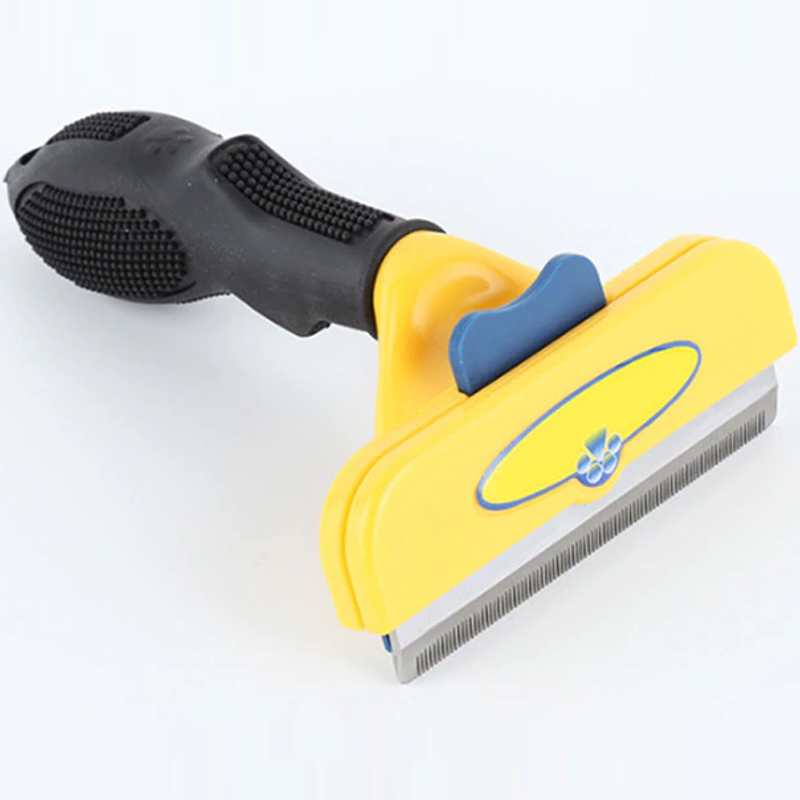
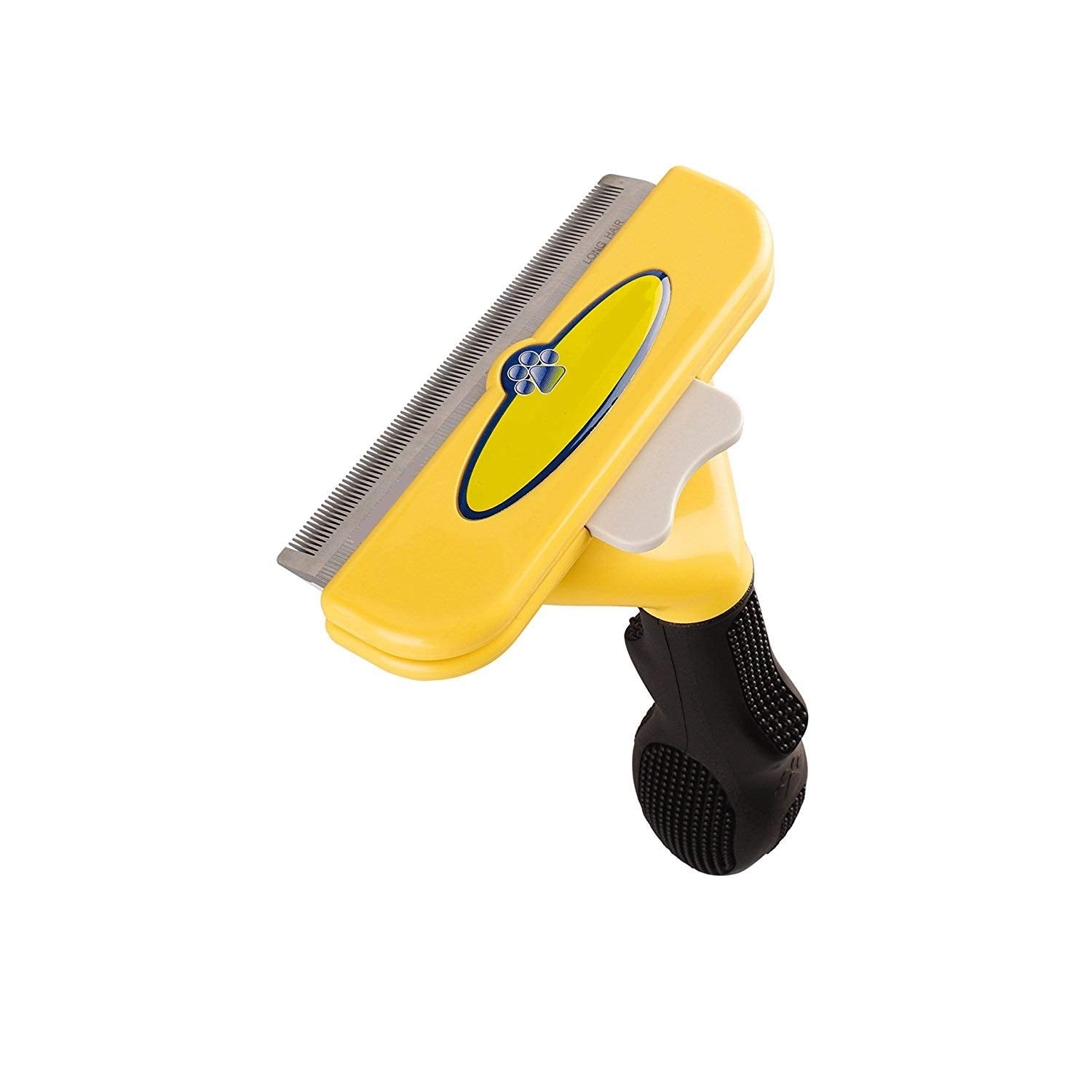
Our deshedder is developed by pet grooming experts who specialize in animal care.
Our Pet Grooming Brush may reduce young & old dogs & cats from shedding by up to 90%. No need to worry about unsightly hair or fur all over your house, beds or car.
Features :
Key Features
Reduces loose hair from shedding up to 90% on regularly groomed dogs
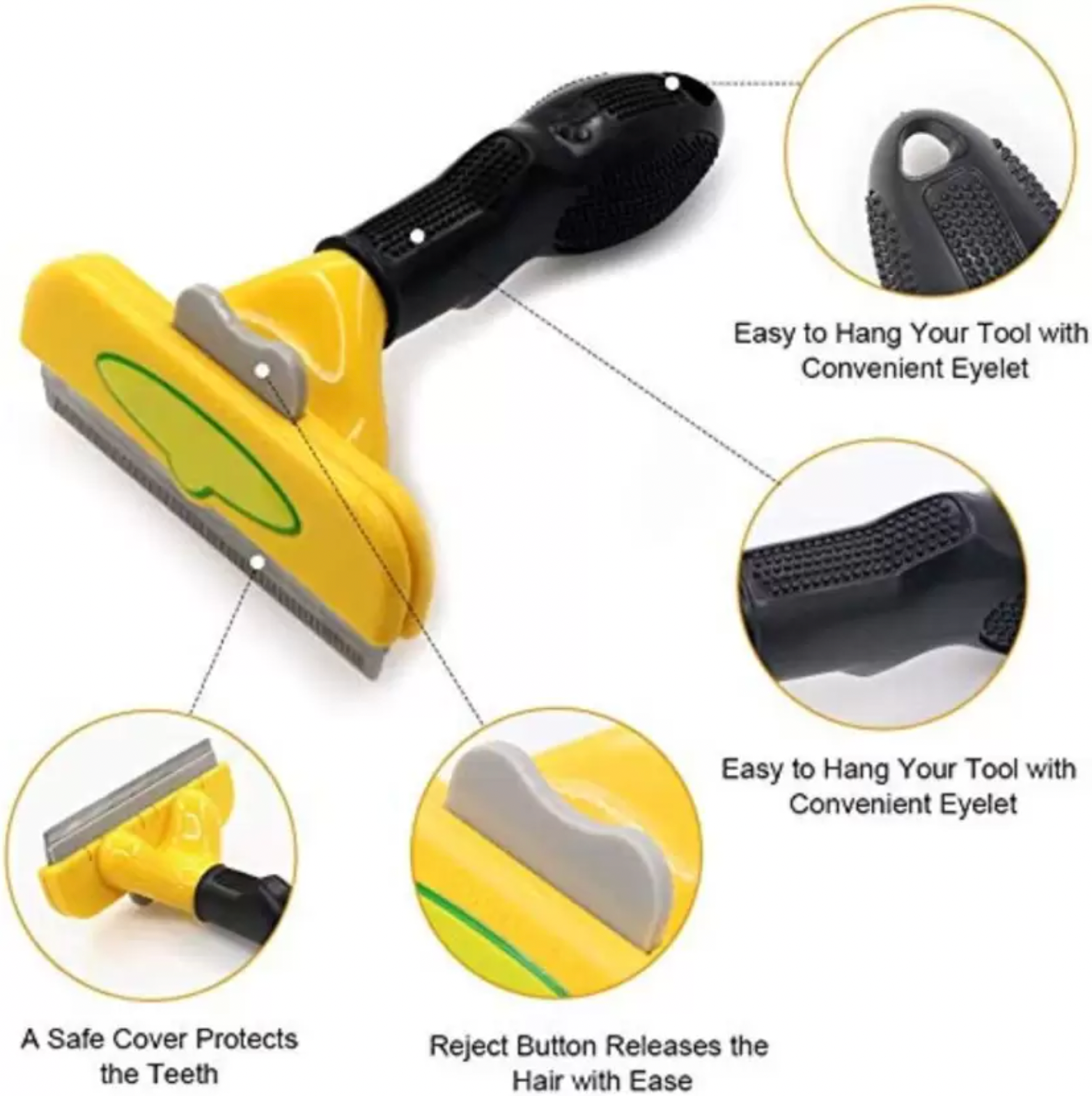
Stainless steel De-shedding edge reaches deep beneath your dog's long topcoat to gently remove undercoat and loose hair
The ejector button cleans and removes loose hair from the tool with ease
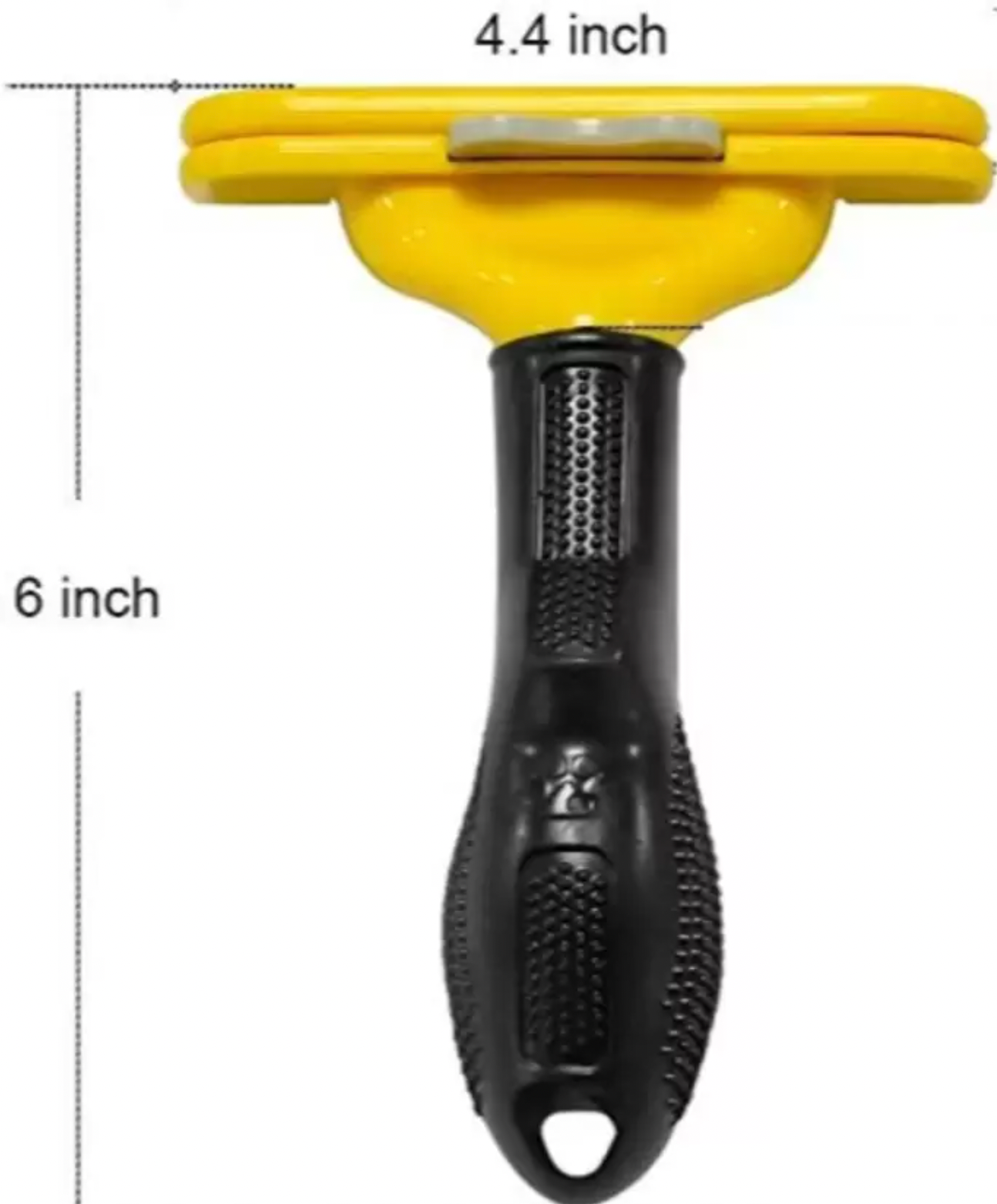
4" De-shedding edge designed for coats longer than 2 inches
FAQs
Is it Just for Dogs?
Our deshedding tool is perfect for all SHEDDING breeds of dogs and cats of all shapes and sizes and is veterinarian approved.
Does it affect the topcoat?
Our grooming brush removes the loose dead undercoat WITHOUT damaging the topcoat. Promotes healthy skin, stimulates the blood and leaves a shinier top coat
Will it work on my short haired dog or cat?
Why Choose This Product
Easily deshed your pet's coat whether short, medium or long, thick or thin, single or double-coat, without any pain or fuss…and quickly!
Regular Grooming For A Healthier, Happier Pet
Grooming is more than aesthetics — regular brushing, nail trimming, and coat care are essential for your pet's health. Grooming sessions also provide an opportunity to check for skin issues, lumps, or parasites before they become serious problems.
Grooming Benefits
Reduces shedding and keeps your home cleaner
Prevents painful matting and skin irritation
Allows early detection of skin conditions or parasites
Strengthens the trust and bond between pet and owner
Grooming Frequency
Short-coated dogs benefit from weekly brushing. Long-coated breeds may need daily brushing to prevent matting. Nails should be trimmed every 3-4 weeks. Ears should be checked weekly and cleaned as needed to prevent infection.
Frequently Asked Questions
The 4-inch stainless steel edge is designed for coats longer than 2 inches. It works through the topcoat to pull loose undercoat. For coats under 2 inches (Boxers, Weimaraners, Beagles), the tines grab topcoat rather than undercoat and can cause skin abrasion if used with too much pressure. Use a rubber brush for short-coated breeds.
Yes. Over-brushing with a de-shedding tool removes not just loose hair but also guard hairs and disrupts the natural coat pattern. Use maximum 2-3 times per week during shedding season, once per week in off-season. Cats in particular develop skin soreness if brushed for more than 5-10 minutes per session with a metal-tined tool.
The ejector button is a commonly reported weak point on budget de-shedding tools. It can stick or lose spring tension after 6-12 months of daily use. When the button sticks, hair accumulates in the tine channel and the tool becomes less effective. Rinse the tool under water and press the ejector repeatedly while wet to clear clogged hair and restore button function.
The 90% reduction applies to loose dead hair removed in that session — it does not permanently reduce the coat or follicle activity. Shedding continues at the dog's normal biological rate. Regular de-shedding keeps loose hair off furniture by removing it at the source during grooming rather than allowing it to fall naturally. The dog still sheds the same amount — you just intercept it.
Do not use the metal de-shedding edge over active hotspots, skin lesions, or healing incisions. The tines will irritate broken skin. For dogs with sensitive skin, use minimal pressure and shorter sessions. If redness appears after grooming, reduce session frequency and pressure — the tines are more aggressive than they appear.
A de-shedding tool removes loose undercoat but will not work through mats or tangles — forcing it through a mat causes pain and can break skin. Always detangle with a wide-tooth comb or slicker brush before using the de-shedding tool. Think of it as the final step in a grooming routine, not the first.